Fukushima Radioecological Observatory in Yamakiya
Site Characteristics
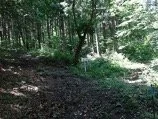
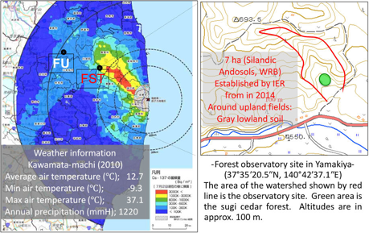
Yamakiya Observatory Site (YOS; 37°35’20.5”N, 140°42’37.1”E) is located approximately 35 km of north-west from the FDNPS (Fukushima Daichii Nuclear Power Station). The area is approximately 7 ha and was established by the Institute of Environmental Radioactivity (IER) at Fukushima University (FU) in 2014. The use by IER is based on the contracts between town municipality/ town-run public forestry corporation and IER. The owner of the site is Kawamata-town municipality.
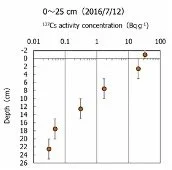
Vertical profile of Cs-137 in soil collected on July 12, 2016 in Yamakiya
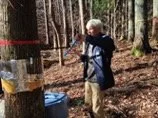
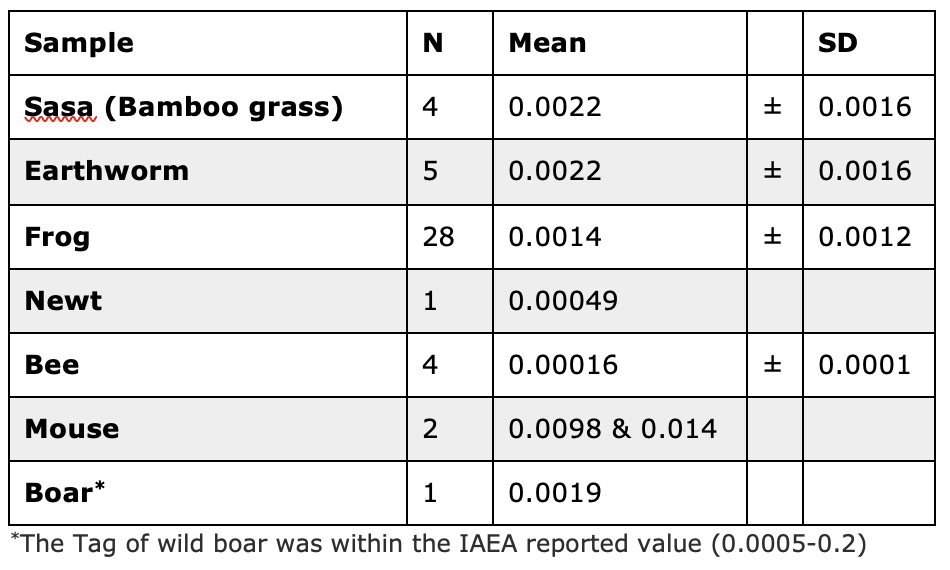
Plant and animal samples (Sasa leaf and stem, earthworm, frog, newt, bee, mouse, wild boar) were collected from Yamakiya and the aggregated transfer factor (Tag) for Cs-137 and transfer factors of elements from surface soil to plant or animals were calculated. The Tag for Cs-137 in the plant and animals is shown in the table below.
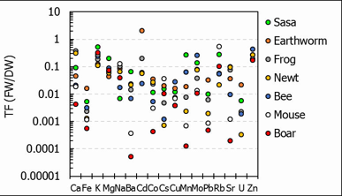
Transfer factors (TF) of elements from surface soil (depth of 0-10 cm) to plant or animals are shown in Figure below (left) and the data are utilized to model transfer in the ecosystem. The TF of 137Cs was higher than that of Cs-133 and they had a good correlation (right). It implies that the transferable fraction of Cs-137 is higher than that of Cs-133. It indicates that the behaviour of stable Cs-133 in the environment should be regarded as a useful analogue in predicting the long-term change of radiocaesium.
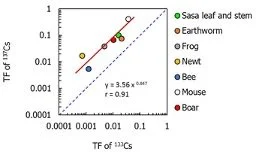
Comparison of transfer factors of stable Cs-133 and Cs-137 in plant and animals in Yamakiya
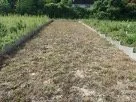
Erosion factor of Cs-137 is determined in experimental fields of forest, uncultivated field and cultivated field in Yamakiya. It is also investigated erosion after decontamination of surface soil.
Future activities
To understand the migration of radiocaesium in forest ecosystems
Training for graduate students in sampling and pretreatment of samples
Plan on joint usage of the contaminated site
To share site specific data between COMET partners to compare, improve and/or validate radioecological models
To compare radionuclide behavior at different observatory sites (Tsushima, Okuma, Chernobyl etc.)
Fukushima prefecture – Collaborative studies with the Institute of Environmental Radioactivity (IER)
Objectives of research activities on effects
To study the influence of mutualistic relationships between radiosensitive and long living plant species such as pine trees and their rapidly adapting microbial and fungal communities in persistence of the plants to withstand in radiological under severe environmental constraints.
To study effects at different biological level i.e. molecular and individual (ecophysiology, behaviour) but also populational (population genetics, etc.), on emblematic species (ICRP, sentinel, etc.) such as pine tree frog, honeybees or other pollinators.
Develop automatic, autonomous, high-throughput systems to study the impact of radioactive contamination on wildlife (in the first instance, pollinating insects).
To study the effects on both soil biodiversity and two associated functional processes, i.e. leaf litter decomposition and soil bioturbation, in relationship to migration of radionuclides in soil and thus to dose exposure. Those two processes are integrative processes related to the transfer and the transformation of organic matter and are carried out by interacting organisms belonging to various biological compartments and ecological niches.
To study effects with different habitats, radionuclide composition and chronical of exposure than the ones at Chornobyl.
Research activities in collaboration with the Institute of Environmental Radioactivity (IER)
Sampling of Caplsella bursa pastoris, Pinus densiflora and different Suilius sp. to study the sensitivity, morphological abnormalities linked to radiation and the adaptation of plants through epigenetic mechanisms (in the framework of a Flemish-Japanese bilateral project (FWO-JSPS, VS01719N) as well as a project funded by the Flemish government. For instance, abnormality of pine trees is found and the frequency of the abnormality is related with radiation dose rate.
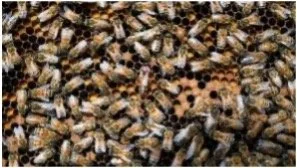
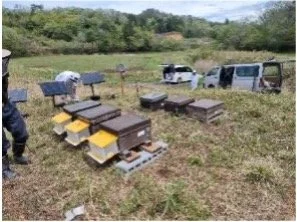
In situ study of honeybees. Assessment of the effects and mechanisms of action of radioactive contamination on their physiology, cognition and populations in the context of chronic exposure (i.e. exposure to significant duration compared to the lifetime of exposed organisms) and at low dose rates (sublethal ecotoxicity) under realistic field conditions. Part of BEERAD (French Research Agency Funding).
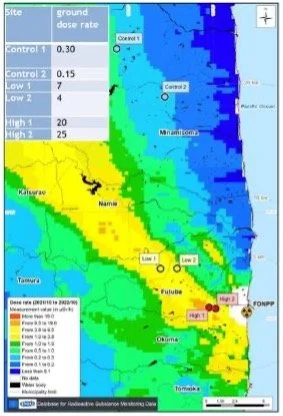
Maps of the different study sites defined and used in the BEERAD project; B- Honey bees in their hives; C- Hives installed in the Fukushima area (Minamisoma city)
(photo credit: B. Gagnaire / IRSN).
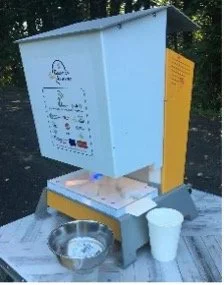
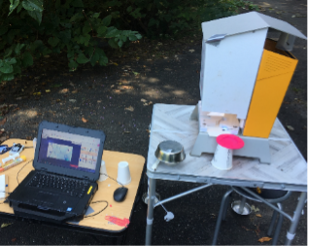
Development and deployment in the field of automated, connected and scalable systems (known as "connected flowers"). Assessment of the cognitive health of thousands of pollinating insects (hornets, wild bees, honeybees, etc.). The insect must solve a task in a Y-maze (connected device using artificial intelligence and recording the learning performance of each insect) to obtain a nectar reward. This project BEECONECT is supported by the French Institute for Radiation Protection and Nuclear Safety (IRSN) and the French National Centre for Scientific Research (CNRS).
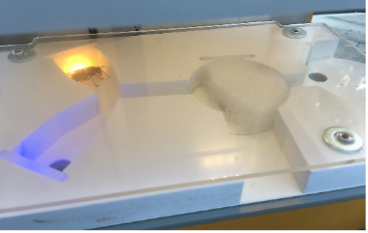
Photos of systems installed in Fukushima Prefecture The first field tests were carried out on hornets (Vespa simillima) in September 2023. (© J-M Bonzom/IRSN).
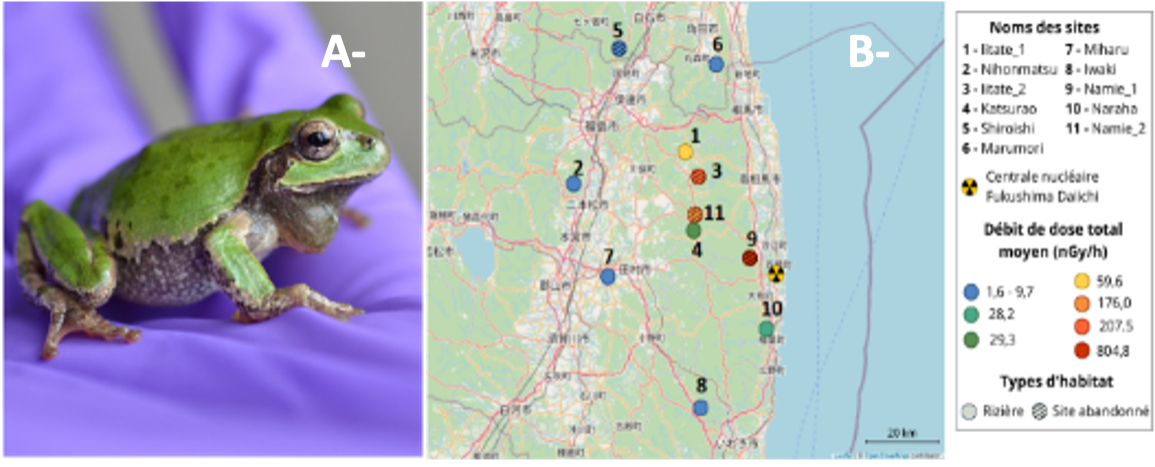
Study in the field of the tree frog Dryophytes japonicus. Assessment of the effects of radioactive contamination at the individual (gene expression, proteomic signatures, ecophysiology, behavior, etc), and the population level (population structure, genetic diversity) along a gradient of radioactive contamination in Fukushima Prefecture. Part of TreeFrog and ERAN projects.
A - Dryophytes japonicus; B - Map of sampled sites in June 2022.
(photo credit: J-M Bonzom /IRSN)
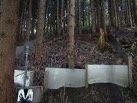
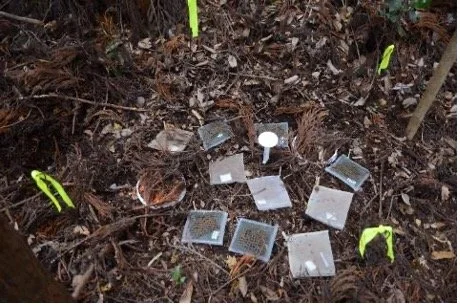
Study of soil biodiversity and associated functional processes. The abundance and diversity of soil organisms (via eDNA methods, etc.) and soil food webs are measured in cedar forests with varying degrees of radio-contamination. Functional processes are studied using litter bag methods, and bioturbation using inert tracers.
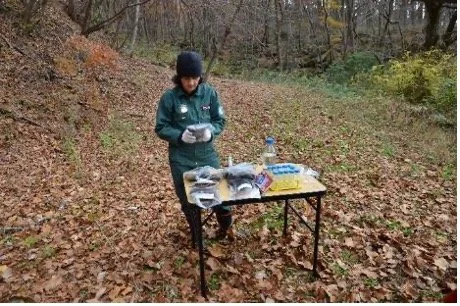
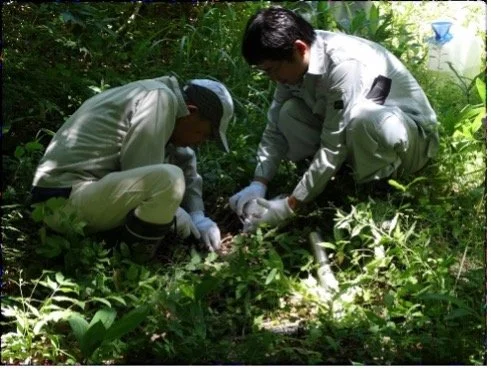
Installation of litter bags and fluorescent tracers in a cedar forest. Field extraction of eDNA from soil and leaf litter (© J-M Bonzom/IRSN).
Research activities in Yamakiya
The inventory of Cs-137 is 670 ± 400 kBq m-2 (n=6) and the Cs-137 activity concentration in surface soil (depth of 0-10 cm) is 19 ± 8.3 Bq g-1. Five years after the accident about 85 % of the Cs-137 is in the upper five cm of soil five years after the accident (Fig. 1). The available fraction of Cs-137 in the upper 10 cm of soil is less than 10%, the strongly bound fraction in the 0-10 cm layer is approximately 85%. The major soil type in the area is andosols.
Transfer factors of elements in plant and animals in Yamakiya